
Vehicle Fleets & Rentals
Detect new damage between check-in and check-out.
Tiliter Vision Agent
Automatically detect visible damage from inspection images to reduce manual checks, disputes and operational delays. Create audit-ready inspection records automatically and identify damage before disputes, failures or claims escalate.
Tiliter scans every photo for damage the moment it's submitted – locating, classifying and grading defects from vehicles and vessels to packaging, components and finished goods.
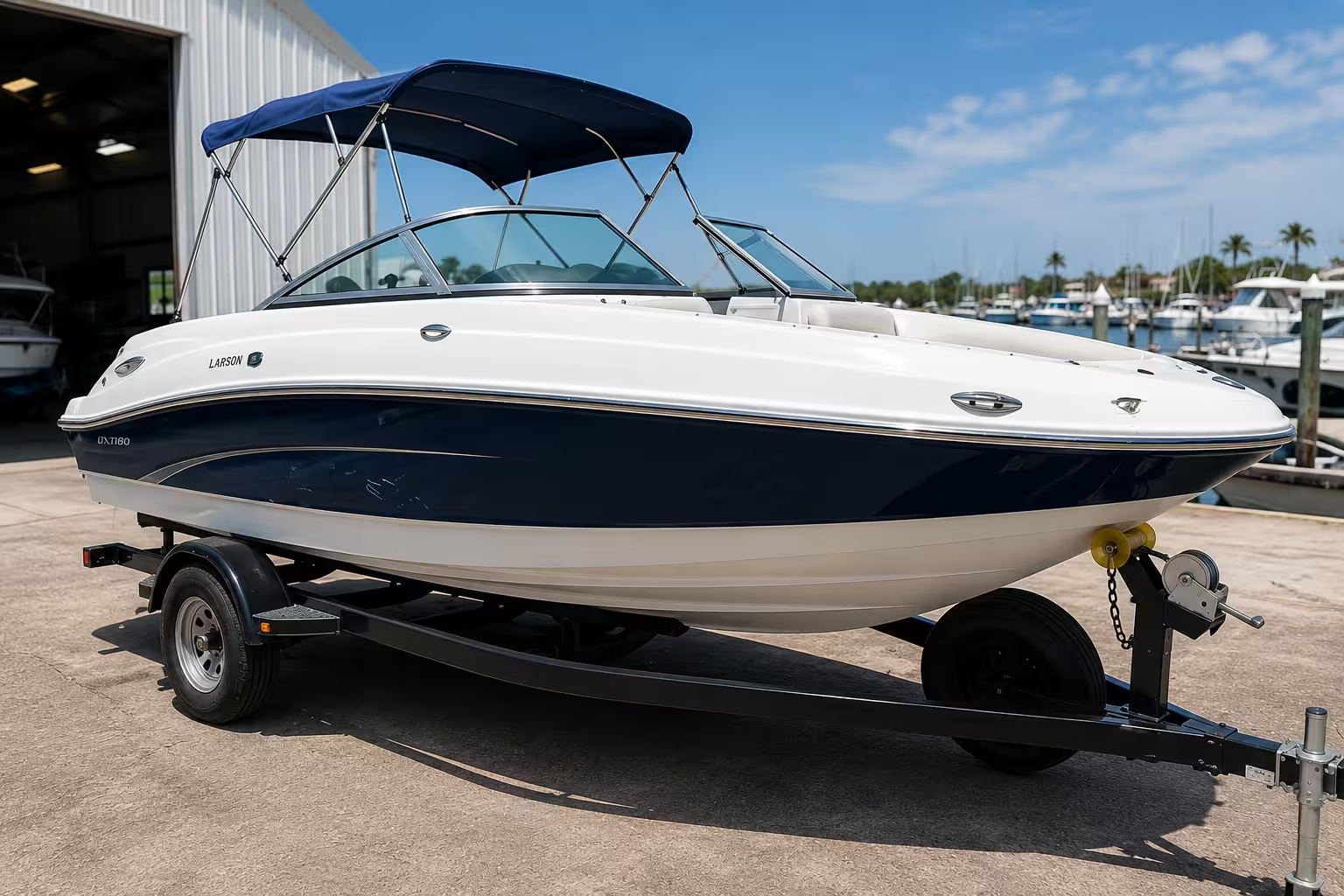
Tiliter is analysing the image for scratches, dents, cracks and other surface defects.
Photo-based detection helps resolve damage disputes before they start.
Use the Damage Detector to reduce inspection costs, improve consistency and prevent avoidable losses.
Detect new damage between check-in and check-out.
Identify defects before products leave the line.
Spot wear, leaks or damage before failures escalate.
Detect damaged goods before dispatch or delivery disputes.
The Damage Detection Agent locates, classifies and grades any visible defect: dents, cracks, scratches, missing parts, surface wear. But detection is one step in the loop. Build a verification check, assign it to a regional crew, and deploy it straight to their phones in the field. Teams capture on site, the agent grades the damage, and every result rolls up into a structured, audit-ready report.
Explore how teams use the Damage Detector to identify defects, reduce claims and automate inspections across real operations.
Recover costs that would otherwise be written off by proving when damage occurred, who was responsible and what evidence supports the claim.
Read use case →Detect vehicle damage automatically to reduce inspection time, costs and disputes.
Read use case →Detect leaks, wear and damage from images before faults become costly failures.
Read use case →Anything you can photograph. The agent looks for visible damage rather than for a particular product, so the same check works on a van, an apartment, a pallet of stock, a machine or a piece of furniture. What changes between them is the standard you set, not the technology.
Somebody photographs the item as part of a check, and the agent examines the image for visible damage, marks where it is and returns that with a confidence score. You get an annotated image and a structured result rather than a note typed into a comment box, which is what makes it useful weeks later.
Cracks, dents, scratches, wear, leaks, stains, corrosion, missing or broken parts. If somebody walking past would call it damage, that is the target. You decide what matters for your own items: a scuff that is fine on a hire van is not fine on a new appliance.
That is usually the whole point. Comparing a check at handover against a check at return shows what changed in between, and because every result carries the image and a timestamp the conclusion is evidenced rather than argued about. Damage detection and occupancy attribution covers how that works when a property changes hands.
Yes, each finding gets a severity as well as a confidence score, so a hairline scratch and a cracked panel are not recorded as the same event. That is what lets you route only the serious ones to a person, or hold an item, instead of reading every report that comes in.
Yes, and it is one of the most common uses. Damage found at the moment a car or van comes back, rather than three weeks later, is damage somebody can still be charged for. Automating vehicle inspections for rental fleets covers the depot workflow.
Yes. The check is identical; the things being checked are walls, floors, fittings and appliances instead of panels and tyres. Before-and-after inspections at changeover give you a record that holds up when a deposit or a repair bill is disputed, which is normally where these arguments end up.
Yes. Teams use it on heavy machinery for wear and leaks, on goods coming back as returns, on transformer enclosures remotely, and on materials arriving on site. Manufacturing and QA use it the way a fleet does: check the item, record the state, act on what turns up.
No. Because it is looking for damage rather than matching an item against a catalogue, it works on whatever you send it. The thing you configure is the threshold, meaning what your operation treats as acceptable, and that is a settings decision rather than a training project.
That is the usual reason for connecting it. The assessment, with the marked image behind it, goes out over the API and can be attached to an asset record, raise a maintenance job, or sit against a claim as the evidence for it. Where the destination is a person rather than a system, Slack, Zapier and Microsoft Power Automate cover it without anything being built.
Build visual verification workflows and deploy them through mobile, web, cameras or your existing systems. Deployed in thousands of locations worldwide and ready to scale with your operations.