
Damage Detection and Occupancy Attribution
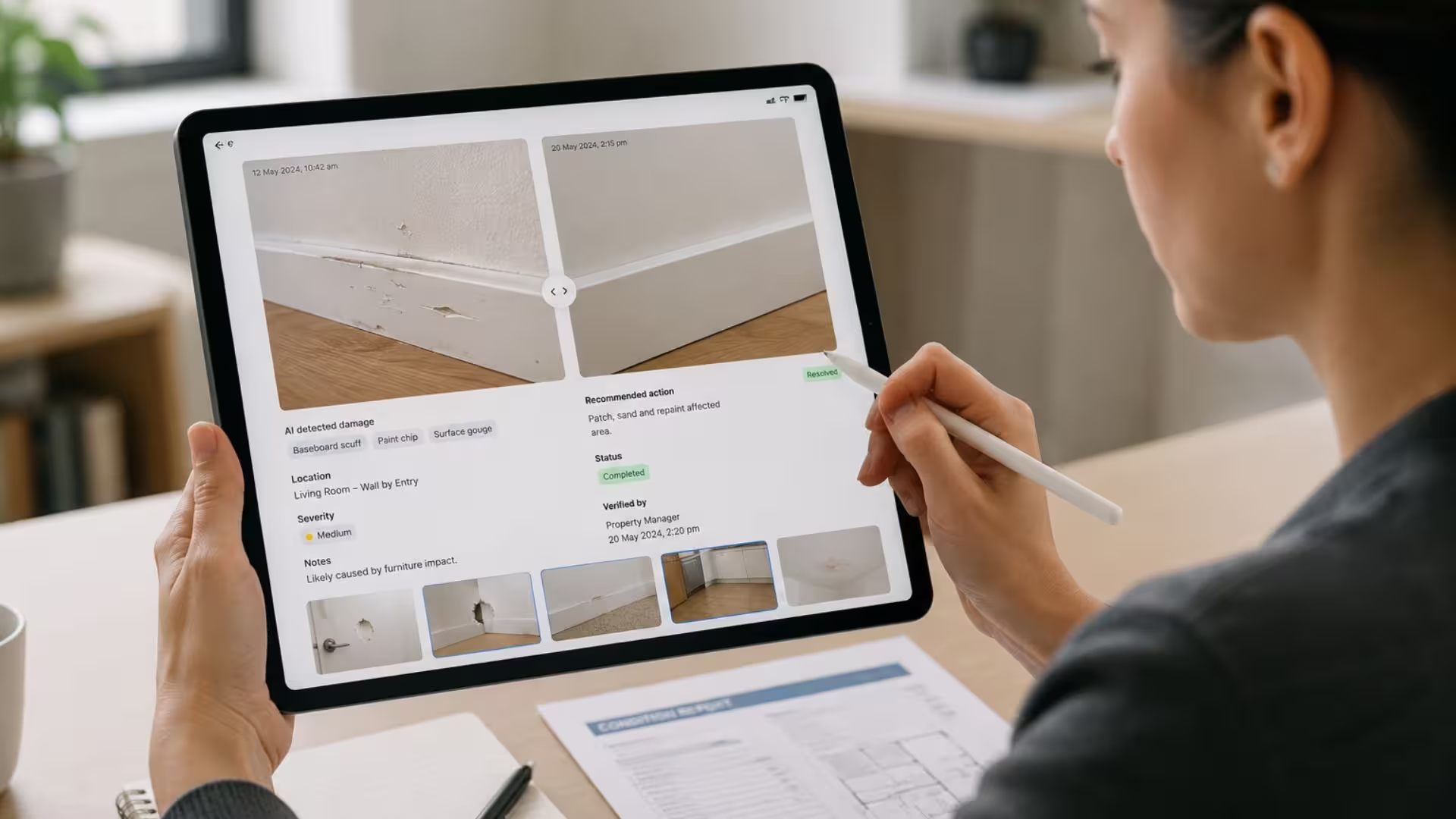
You can prove what was damaged between one guest or tenant and the next by capturing the condition of a space at each turnover and allowing a Vision Agent to compare it against the previous occupancy.
Tiliter’s Damage Detector identifies what is new since the last inspection, links it to the occupancy period in which it appeared, and automatically generates evidence that can support a bond claim, tenant charge, insurance claim or dispute.
The point is not spotting a scratch.
The point is being able to prove it was not there before.
Damage between occupancies is where accommodation and rental operators lose money quietly. The damage is real, but the proof is not, so the cost is often absorbed instead of recovered. Without a reliable record of previous condition, responsibility becomes difficult to establish and legitimate claims become difficult to enforce.
Why Current Damage Workflows Fail
Most property and accommodation operators still rely on:
- Manual walk-throughs completed under time pressure between turnovers
- Photos captured inconsistently with no reliable baseline for comparison
- Damage discovered days later when responsibility is unclear
- Evidence scattered across phones, emails and different systems
- Bond and deposit disputes that become one person’s word against another
Without a documented record of previous condition, “it was already like that” becomes difficult to challenge.
How Tiliter Helps
Tiliter enables property and accommodation teams to create damage verification workflows powered by the Damage Detector Vision Agent.
The baseline is the condition of the property at the end of the previous occupancy. During the next turnover, the platform compares new images against that baseline and identifies what has changed.
The value is not a single image of a damaged wall, broken fixture or stained carpet.
The value is the comparison.
New damage is separated from existing wear, attributed to a specific occupancy period, documented with supporting evidence and organised into a report designed to support recovery decisions.
With that in place, operators can:
- Separate new damage from pre-existing wear automatically
- Attribute damage to a specific guest or tenancy period
- Produce timestamped before-and-after evidence
- Support bond claims, charge-backs and insurance claims
- Resolve disputes with documented evidence rather than opinion
- Recover costs that would otherwise be written off
The Workflow
1. Establish the Baseline
Capture the condition of the property at move-in, check-in or immediately following a turnover. This becomes the reference point for future comparisons.
2. Capture the Property at Turnover
At move-out or turnover, staff use the phones or tablets they already carry to capture the current condition of the space. Images are linked to the property, unit, occupancy and inspection date.
3. Detect What Changed
The Damage Detector compares the new inspection against the baseline and identifies new scratches, dents, stains, chips, breakages and other condition changes that were not previously present.
4. Generate Occupancy-Based Evidence
New findings are automatically documented with supporting imagery, occupancy details, timestamps and location information, creating evidence that can be used to support recovery actions.
From Photos to a Claim-Ready Property Assessment
The platform automatically generates a comprehensive occupancy assessment from submitted images.
Rather than manually reviewing hundreds of photos, property managers receive a structured report containing:
- Executive summaries of key findings
- Room-by-room condition assessments
- New damage identified since the previous occupancy
- Before-and-after evidence comparisons
- Severity assessments
- Maintenance observations
- Recommended follow-up actions
- Areas requiring attention before the next guest or tenant arrives
The result is not an image analysis report.
It is a property assessment designed to support operational decisions, maintenance planning and cost recovery.
Occupancy Attribution and Recovery
The most important question is not whether damage exists.
It is when it appeared.
Every finding is linked to the occupancy period during which the change occurred, helping operators determine responsibility with greater confidence.
Instead of debating whether a mark existed previously, teams can reference documented evidence showing the property’s condition before and after each occupancy.
This creates stronger support for:
- Bond and deposit claims
- Guest damage charges
- Tenant recovery actions
- Insurance claims
- Dispute resolution processes
Damage stops being a cost that is quietly absorbed and becomes a cost that can be documented, justified and recovered.
Built for Real Property and Accommodation Operations
Tiliter is designed for short-term accommodation operators, property managers, serviced apartments, build-to-rent operators and landlords managing turnovers across multiple properties.
The platform supports:
- Mobile phones and tablets
- Multi-property operations
- Occupancy-linked inspections
- Automated reporting workflows
- API and webhook integrations
- Audit trails and historical records
Test the Workflow
Capture a baseline inspection, perform a turnover inspection and see how the Damage Detector identifies new damage, attributes it to an occupancy period and generates claim-ready evidence.
Start building your workflow in the Tiliter Vision Agent Platform.