
Public Space Cleanliness Monitoring with Vision AI
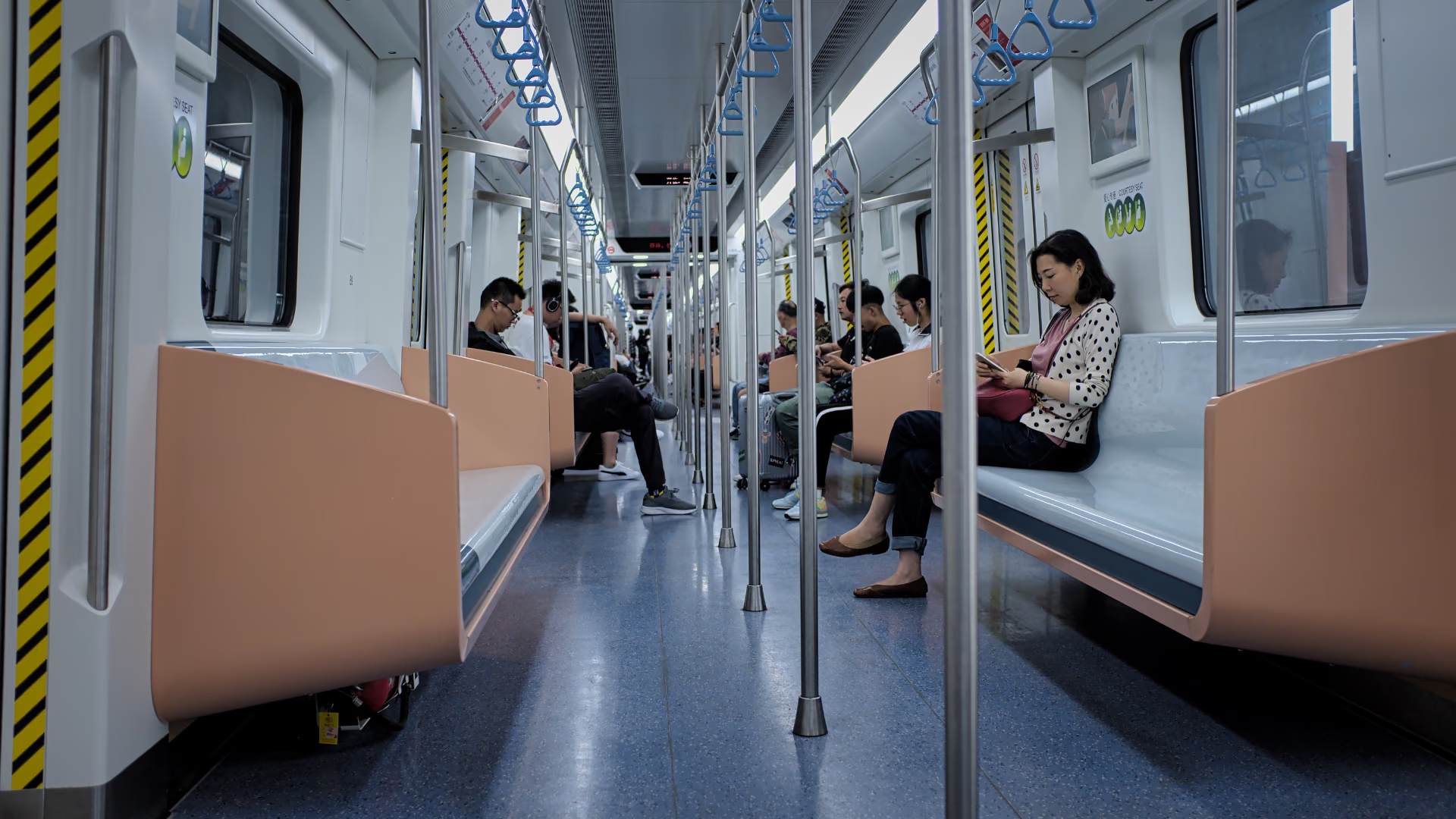
Public spaces are difficult to keep consistently clean.
A station can be spotless at 8am and need attention an hour later. A train may leave a depot clean but return with spills or rubbish after a busy service. Restrooms, waiting areas, food courts and other shared facilities can change quickly depending on how they are being used.
The challenge is not necessarily knowing how these spaces should look. Most organisations already have cleaning standards, schedules and inspection processes.
The challenge is knowing what they actually look like right now – across hundreds or thousands of spaces – without somebody constantly walking around checking them.
That is where Vision AI can help.
From cleaning schedules to visual verification
Traditional cleanliness monitoring tends to rely on scheduled cleaning rounds, checklists, complaints and manual inspections.
All of these serve a purpose, but they tell an operations team different things.
A completed checklist tells you that a task was marked as finished. A cleaning schedule tells you when somebody was supposed to attend. A customer complaint tells you that something eventually went wrong.
None necessarily verifies the physical condition of the space.
Vision AI adds that missing layer.
Images captured by staff, mobile devices or existing camera infrastructure can be analysed against defined cleanliness criteria. The system can identify visible issues such as litter, spills, stains, overflowing waste, clutter or surfaces that do not meet the expected standard.
Instead of asking only “Was this area cleaned?”, operators can ask “Does this area currently meet our standard?”
That is a much more useful operational question.
Public-space monitoring does not have to mean watching everything continuously
There is often an assumption that machine vision requires continuously streaming every camera into an AI system.
For many public-space cleanliness workflows, that is unnecessary.
A better approach is to capture images when they are operationally useful.
A train arrives at the end of a service. A cleaner completes a task. An inspection becomes due. A facility opens for the morning. A fixed camera captures an image at defined intervals.
These events can trigger a visual check.
The operational system knows when something should happen. Vision AI verifies what actually happened in the physical environment.
This makes it possible to use machine vision as an operational sensor rather than simply another CCTV feed.
What can Vision AI check?
Tiliter’s Cleanliness Evaluator applies the same visual criteria to each submitted image and returns structured findings about the visible condition of the space.
Depending on the environment and workflow, that could mean identifying rubbish left on a train floor, a spill in a station entrance, marks on a shared surface, an overflowing bin or an amenity that requires another cleaning pass.
The same workflow can also combine multiple visual checks.
For example, a public restroom inspection might verify cleanliness while also confirming that required consumables are present. A station inspection could check presentation standards, signage and whether objects are missing or out of place.
The important part is that the output is no longer simply another photograph for somebody to review later.
The image becomes structured operational data.
Faster action when a space needs attention
Detecting an issue is only useful if something happens next.
A visual verification workflow can connect the result directly to the operational response.
If a space passes, the result is recorded. If it falls below the required standard, the workflow can flag the issue, notify the appropriate team or request another inspection after rework.
That shortens the gap between a problem appearing and somebody being able to act on it.
It also creates an evidence trail showing what was seen, when it was seen and what happened afterwards.
For facilities teams managing multiple sites or cleaning contractors, this provides much more visibility than periodically reviewing photographs or relying on isolated complaints.
Consistent standards across distributed operations
One of the hardest parts of managing public spaces is consistency.
Different supervisors can judge the same environment differently. Different contractors may interpret a specification differently. And as the number of sites grows, manually reviewing every area becomes increasingly difficult.
Vision AI can apply the same criteria across every submitted image.
That doesn’t remove people from the process. It gives them a consistent first layer of verification.
Supervisors can spend less time checking routine work and more time investigating exceptions, improving recurring problem areas and working with teams that need support.
For cleaning contractors, the same records can also provide clearer evidence of completed work and the condition of a site at a particular time.
Where public-space cleanliness monitoring can be used
The same approach can work across trains and buses, stations and platforms, airports, shopping centres, offices, campuses, public restrooms, venues and other high-traffic shared facilities.
The capture method can change with the environment.
In one location, a staff member might take a photo through the Tiliter mobile app after completing a cleaning round. In another, images might come from an existing fixed or IP camera. Other organisations may already capture images through their own operational systems and send them into a verification workflow.
The visual check remains the same: does the space meet the standard, and if not, what needs to happen next?
Moving from inspection to operational visibility
The goal is not to replace cleaning teams or eliminate human supervision.
It is to make visual inspection scalable.
Public-space operators already generate enormous amounts of operational information about schedules, tasks, assets and locations. What is often missing is reliable information about the physical state of those environments.
Vision AI provides a way to connect the two.
Capture an image when it matters. Verify it against the required standard. Turn the result into an action. Keep the evidence.
That creates a much more useful form of public-space cleanliness monitoring: not more cameras, more checklists or more manual reviews, but a consistent way to turn what is visible into something operations teams can act on.