
Proof of Delivery Verification
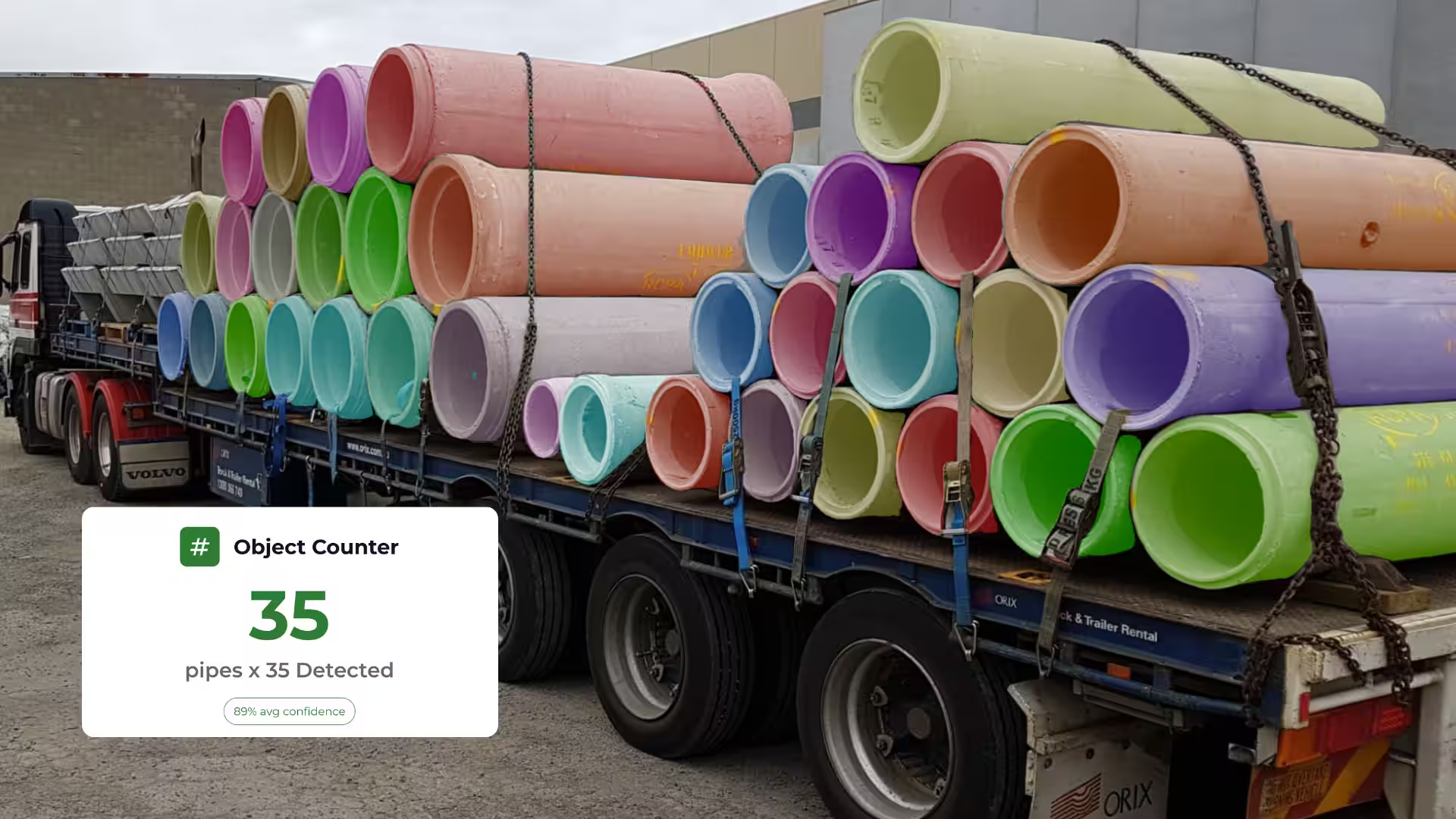
Construction, infrastructure and industrial projects depend on accurate deliveries of pipes, beams, panels and other materials. Yet delivery verification is still heavily manual, inconsistent and difficult to audit after the fact.
Operators often rely on:
- Manual counting
- Paper delivery notes
- Supervisor sign-offs
- Photos nobody consistently reviews
- Incomplete audit trails
Disputes frequently arise when delivered quantities do not match expectations, and by the time issues are discovered the shipment has often already been accepted, unloaded or processed downstream.
Why Current Delivery Verification Workflows Fail
Many delivery operations still struggle with:
- Manual counting bottlenecks
- Inconsistent verification standards
- Weak audit evidence
- Delayed discrepancy detection
- Human counting errors
- Lost paperwork
- Visual evidence disconnected from workflows
As project volume increases across sites and contractors, maintaining delivery accuracy becomes increasingly difficult without structured operational verification.
How Tiliter Helps
Tiliter allows operations teams to build delivery verification workflows powered by Vision Agents.
Delivery evidence is captured directly during the operational workflow using mobile devices already used in the field.
Operational teams can verify:
- Delivered quantities
- Material presence
- Shipment discrepancies
- Missing items
- Delivery completeness
- Load conditions
- Delivery compliance
Verification happens before disputes become operational problems.
The Workflow
1. Capture Delivery Reference Information
Operators capture:
- Delivery notes
- Manifests
- Labels
- Expected inventory lists
Tiliter extracts:
- Expected item types
- Quantities
- Delivery references
- Shipment metadata
2. Capture Operational Evidence
Drivers, warehouse staff or site operators capture images of:
- Truck beds
- Containers
- Pipe bundles
- Pallets
- Construction deliveries
- Industrial loads
Images are automatically linked to:
- Site
- Shipment
- Workflow
- Operator
- Delivery timestamp
- Operational context
3. Verify Delivered Quantities
Tiliter analyses the submitted evidence and verifies whether delivered quantities match the expected shipment.
Verification workflows can:
- Count specified item types
- Detect discrepancies
- Compare against manifests
- Flag missing items
- Generate visual overlays
- Trigger escalation workflows
4. Generate Operational Outputs
Verification results become:
- Match / mismatch outcomes
- Delivery approvals
- Audit-ready delivery records
- Timestamped operational evidence
- Delivery discrepancy alerts
- Workflow escalations
- Structured operational reports
- Operational dashboards
Verification drives operational action in real time.
Rather than relying on supervisors manually reviewing delivery evidence after the fact, only discrepancies or unusual conditions require escalation.
Structured Operational Records
Every completed workflow creates a structured operational record containing:
- Submitted delivery evidence
- Verification outcomes
- Shipment findings
- Timestamps
- Audit trails
- Delivery and workflow context
- Escalation history
Over time, these records create a continuously updated operational view across construction projects, logistics operations and industrial delivery environments.
Built for Real Operational Environments
Tiliter can operate as a complete operational verification workflow platform or integrate into existing operational systems.
Teams can:
- Assign delivery verification workflows
- Capture evidence directly in the platform
- Verify shipments operationally
- Generate audit-ready reports
- Escalate discrepancies automatically
- Track operational consistency across sites
Supports:
- Mobile phones and tablets
- Multi-site operational workflows
- APIs and webhooks
- Existing logistics and construction systems
- Operational dashboards
- Supervisor escalation workflows
Test the Workflow
Upload delivery images, compare against expected quantities and test operational verification workflows using the Tiliter Vision Agent Platform.
Tiliter AI
Test on Your Images