
Construction Site Standards Verification
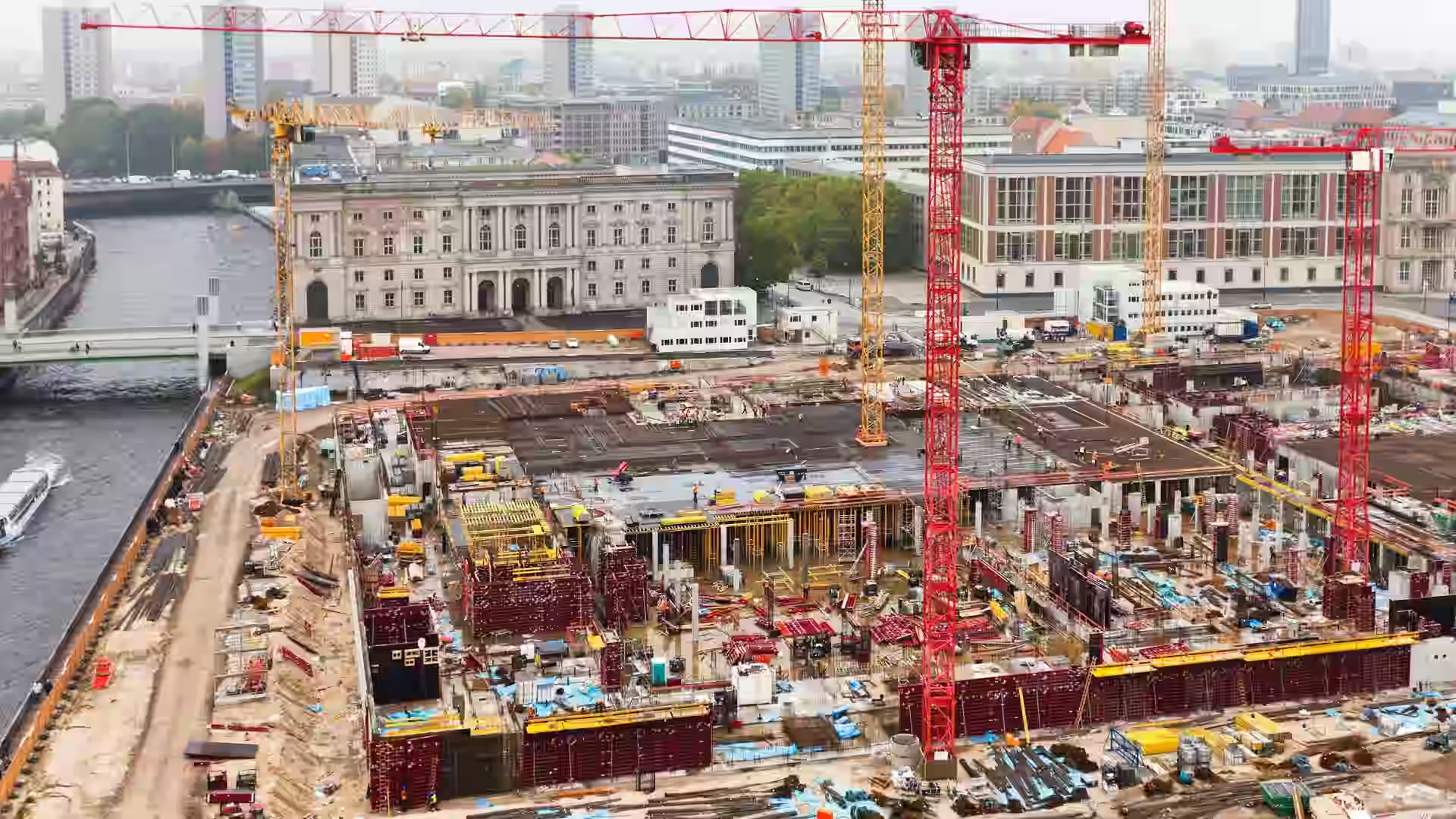
Construction sites change constantly. Materials move between work zones, temporary hazards appear without warning, walkways become obstructed and housekeeping standards drift as crews and subcontractors move through active areas.
By the time a supervisor walks the site, conditions may already have changed.
Why Current Site Verification Workflows Fail
Most construction companies still rely on:
- Manual inspections
- Supervisor walkthroughs
- Checklist-based reporting
- Disconnected photo evidence
- Delayed escalation workflows
- Subjective compliance reviews
As projects scale across multiple sites, crews and shifts, maintaining consistent operational standards becomes increasingly difficult without structured operational verification.
Different inspectors apply different judgement. Issues are missed. Records become fragmented across disconnected reporting processes.
How Tiliter Helps
Tiliter allows construction teams to build operational verification workflows powered by Vision Agents.
Operational teams can define exactly what compliance looks like for each workflow, project area or operational task.
This may include:
- Housekeeping requirements
- Walkway clearance
- PPE usage
- Material storage conditions
- Signage visibility
- Equipment placement
- Site readiness
- Safety compliance checks
Each requirement becomes a verifiable operational standard that can be applied consistently across every site, crew and shift.
The Workflow
1. Assign Operational Verification Workflows
Construction workflows are distributed directly to workers, subcontractors and supervisors through the Tiliter platform.
Tasks can be assigned by:
- Site
- Area
- Crew
- Shift
- Contractor
- Operational workflow
2. Capture Operational Evidence
Workers capture visual evidence directly in the field using mobile phones or tablets already used on-site.
Images are automatically linked to:
- Site location
- Workflow
- Task
- Team
- Time
- Inspection context
3. Verify Site Conditions
Tiliter Vision Agents evaluate each submission against the defined operational requirements and verify whether site standards have been met.
Verification workflows can identify:
- Obstructed walkways
- Missing PPE
- Unsafe material placement
- Housekeeping failures
- Missing signage
- Compliance issues
- Site readiness problems
- Operational hazards requiring escalation
4. Generate Operational Outputs
Verification results become:
- Compliance outcomes
- Supervisor alerts
- Escalation workflows
- Corrective action requests
- Audit-ready reports
- Timestamped operational records
- Site dashboards
- Governance reporting
Verification drives operational action before issues compound downstream.
Rather than relying on supervisors manually reviewing every submitted site image, only failed checks or unusual conditions require escalation.
Structured Operational Records
Every completed workflow creates a structured operational record containing:
- Submitted visual evidence
- Compliance outcomes
- Verification findings
- Timestamps
- Audit trails
- Site and workflow context
- Escalation history
Over time, these records create a continuously updated operational view across the entire project portfolio – allowing construction companies to enforce standards consistently, improve governance and reduce repetitive verification overhead without proportionally increasing supervisor workload.
Built for Real Construction Operations
Tiliter can operate as a complete operational verification workflow platform or integrate into existing construction and operational systems.
Teams can:
- Assign site verification workflows
- Capture operational evidence directly in the platform
- Verify compliance conditions
- Escalate operational hazards
- Generate audit-ready reports
- Track operational consistency across projects
Supports:
- Mobile phones and tablets
- Multi-site operational workflows
- APIs and webhooks
- Existing construction systems
- Operational dashboards
- Supervisor escalation workflows
Site visibility and hazard detection
Construction sites are dynamic environments where workers, vehicles, machinery and materials constantly move through the same space. Even small lapses in safety, coordination or visibility can create delays, risks and unnecessary cost.
Maintaining oversight often relies on manual inspections or expensive always-on camera systems.
Tiliter Vision Agents provide a simpler approach.
Using snapshots captured from site cameras, drones or smartphones, Tiliter analyses images in the cloud to detect people, machinery, materials and visible risks within seconds.
How It Works
Instead of continuous video monitoring, teams capture images at key moments such as:
- shift starts
- inspection rounds
- delivery arrivals
- milestone completions
- end-of-day checks
Each image is analysed automatically and results are returned through the Tiliter dashboard or existing workflows.
What Can Be Detected
- Workers missing helmets or high-visibility PPE
- Vehicles or machinery in restricted areas
- Blocked walkways or access paths
- Material placement issues
- Progress visibility across active zones
- General site activity and occupancy
Extend with Additional Vision Agents
Tiliter can combine multiple Vision Agents for broader site oversight.
Damage Detection
Identify visible cracks, wear or damage to surfaces and equipment.
Object Verification
Confirm expected parts, materials or equipment are present.
Label Validation
Check labels, markings or identifiers against project requirements.
Why It Matters
Better Site Visibility
Gain fast visual oversight across multiple zones and contractors.
Faster Safety Response
Spot hazards earlier and reduce time between inspections.
Lower Infrastructure Cost
Avoid expensive always-on video analytics and dedicated edge hardware.
Stronger Documentation
Create a timestamped visual record of progress, safety checks and site conditions.
Easy Deployment
Use existing cameras, drones or mobile devices without disrupting operations.
Built for Modern Construction Projects
From civil works and infrastructure sites to industrial builds and shutdown projects, Tiliter Vision Agents help teams improve visibility, safety and accountability with lightweight image-based automation.
Test the Workflow
Upload site inspection images, define operational standards and test construction verification workflows using the Tiliter Vision Agent Platform.
Tiliter AI
Test on Your Images