
Whose Damage Is It? Why Every Handoff Needs a Photo of Condition
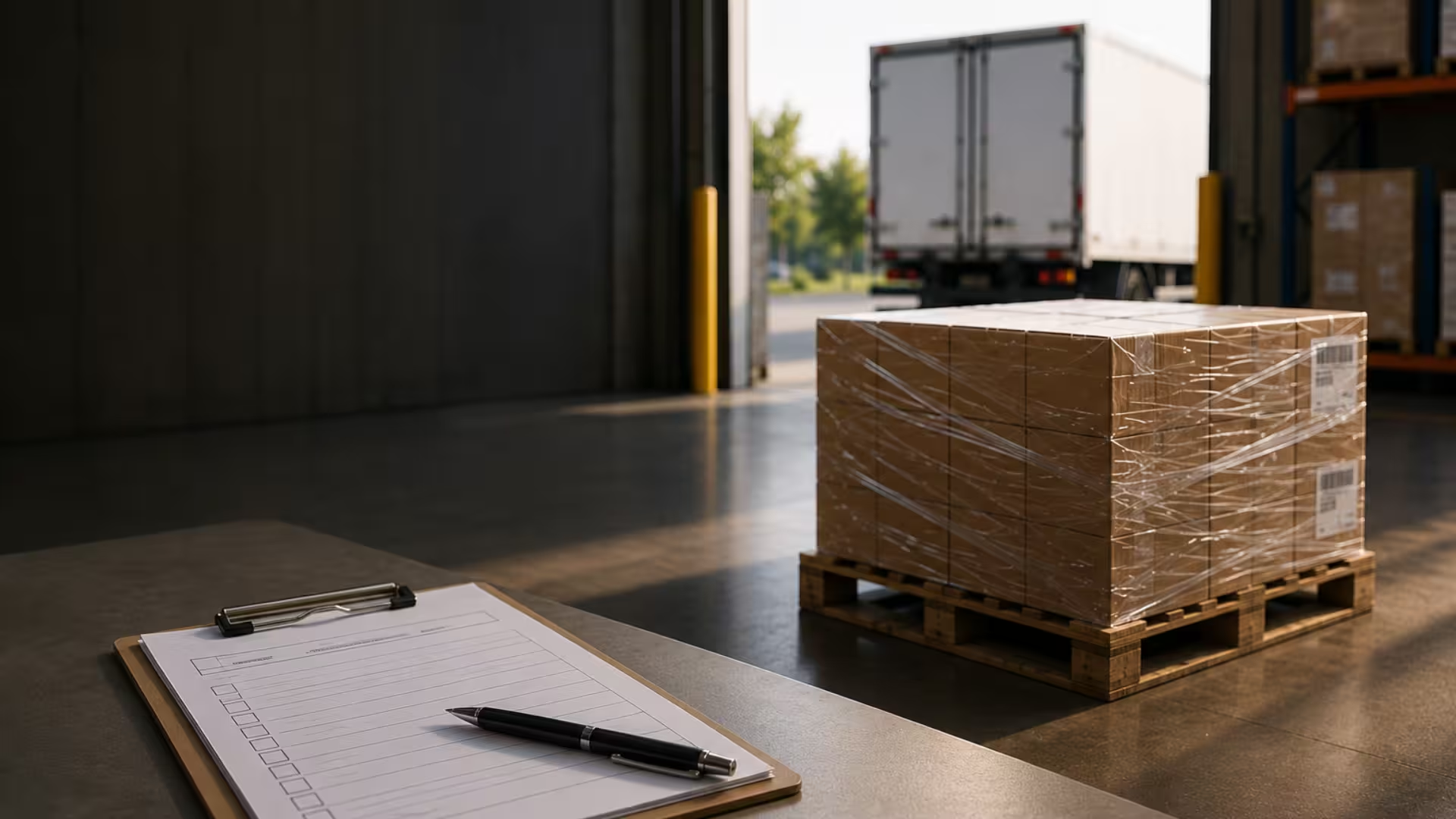
A pallet rolls off the truck with a crushed corner.
The driver says it was already damaged at pickup. The warehouse insists a forklift clipped it at the dock. The supplier is certain everything left their facility in perfect condition.
Three stories. No evidence. And this plays out thousands of times a day across warehouses, distribution centres, loading docks and retail backrooms, because goods change hands constantly – manufacturer to carrier, carrier to warehouse, warehouse to store, store to customer. Every handoff is another opportunity for uncertainty.
When nobody can prove what the shipment looked like at the exact moment responsibility changed, the dispute can’t be settled on facts. So it gets settled on whoever gives up first.
And here’s the part most operations underestimate: the crushed pallet is rarely the biggest cost.
The real cost isn’t the damage – it’s the dispute
The damage itself is usually only the beginning. The real cost comes afterwards.
Claims teams chase emails. Warehouse managers dig through photos saved on personal phones. Drivers are asked to remember a delivery from two weeks ago. Receiving staff try to recall whether the torn wrap was already there or appeared later. Concealed-damage claims are the worst of all – by the time the box is opened, the evidence is long gone.
Eventually someone absorbs the loss, not because they’re responsible, but because proving otherwise costs more than the claim itself.
That’s what makes damage disputes expensive. Not the product. The uncertainty around it. Without objective evidence at every handoff, every claim becomes a negotiation – and negotiations burn time, money and trust.
Why delivery notes and checklists don’t close the gap
Businesses have leaned on signatures and inspection checklists for decades. They’re useful records, but neither one actually captures the condition of a shipment.
A signature proves delivery, not condition. A signed delivery note confirms goods arrived at a place and time. It says nothing about crushed corners, torn shrink wrap or dented cartons. And in fast-moving operations, detailed inspection of every shipment simply isn’t realistic – drivers need to unload, receiving teams are processing several deliveries at once. By the time anyone notices damage, the only record may be a signature confirming the goods changed hands.
Checklists depend on memory. A box marked “No Damage Found” tells you what someone believed they saw during a busy shift, not what the shipment actually looked like. Weeks later, when a dispute surfaces, that checklist rarely ends the conversation.
Capturing evidence was never the problem
The photos already exist. The gap is what happens next.
Nearly every warehouse already has smartphones, handheld scanners, tablets or fixed cameras that take perfectly good images.
The problem is what happens to those images. Most get dumped in shared folders, buried in email threads, or forgotten entirely. They’re only ever retrieved after something has already gone wrong – and even then, someone has to hunt through hundreds of photos to find the one that matters.
The shift isn’t taking more photos. It’s turning each photo into a verified record of condition at the moment it’s captured. That’s the difference between documenting work and verifying it.
Turning images into operational data
Inside Tiliter, a photo never sits in isolation. It becomes part of a verification workflow.
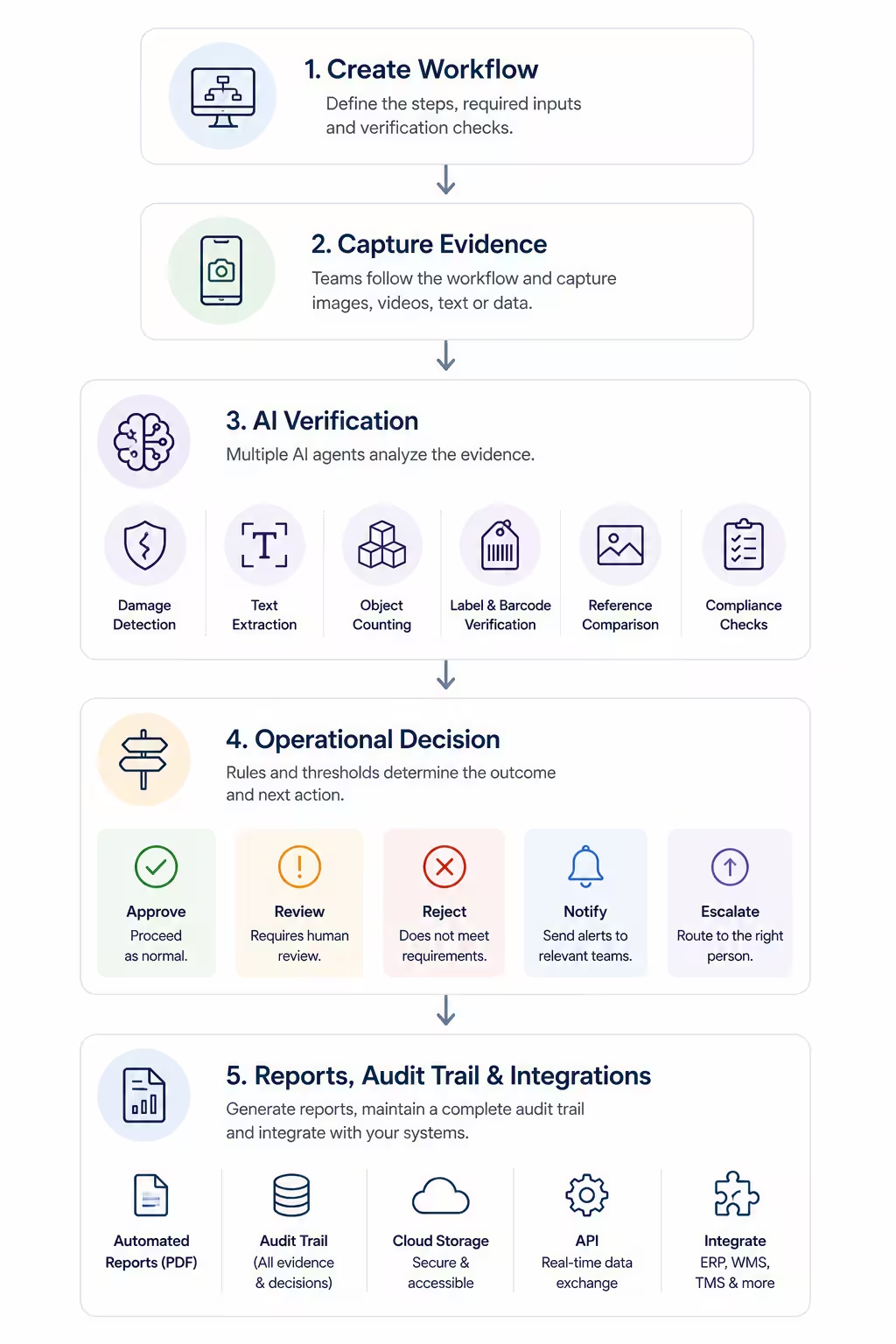
A manager builds the workflow once, defining exactly what to check during receiving, dispatch or returns. Staff follow the guided steps on their phone or handheld device, capturing the required images as they work.
The moment an image is captured, Tiliter automatically runs one or more AI vision agents in the background. Depending on the workflow, those agents can:
- Detect damaged packaging, tears and water damage
- Verify labels, barcodes and documentation
- Extract shipment numbers via OCR
- Count pallets, cartons or individual items
- Compare products against reference images
- Confirm compliance requirements have been met
The output isn’t another folder of photos – it’s structured operational data. Every result is linked to the shipment with timestamps, location, the captured images, the person who completed the workflow, the AI’s decisions, any exceptions raised, and an auditable pass-or-fail outcome.
The real value isn’t just detecting damage. It’s creating an auditable operational record every time work is completed. Months later, when a supplier questions a claim or a customer disputes a delivery, the evidence is already there. No searching, no relying on memory, no uncertainty about what happened. Every handoff leaves an auditable record behind it.
What this looks like in practice
Picture a typical inbound delivery.
Before the truck arrives, the warehouse manager has already configured a receiving workflow – which images to capture, which checks to run. When the shipment lands, receiving staff open the workflow and follow the prompts. They photograph the pallet. Within seconds, Tiliter checks for crushed corners, torn wrap and broken straps, reads the shipment numbers off the labels, confirms the right labels are attached, and verifies the expected number of pallets arrived.
If everything matches, the workflow closes immediately. No manual inspection report. No checklist. No extra admin.
If something’s off, the workflow records the evidence, flags the exception, generates a report and routes it to the right person – before the shipment moves any further.
The same process runs in reverse on dispatch. Photographing goods before they leave creates an objective record of their condition. If a customer later reports damage, both sides start from the same facts instead of arguing about what probably happened.
AI doesn’t replace your team, it makes them consistent
Taking photographs was never the hard part. Inspecting every shipment with the same care every day, every shift, every employee, across every site – is.
People get distracted. Operations get busy. Small defects slip through. That’s normal. AI doesn’t replace experienced warehouse teams; it just runs the same repetitive visual checks reliably, every single time, while staff keep doing their jobs. Most shipments pass instantly. Only genuine exceptions get escalated – so your quality team spends its time on the handful of shipments that actually need a human, not the hundreds that don’t.
Frequently asked questions
Won’t this just create more photos to review? The opposite. Every image is analysed automatically as it’s captured, and only shipments with genuine exceptions reach a person. For operations handling hundreds or thousands of shipments a day, that means reviewing the few that need attention instead of all of them.
**What if the damage is hard to see?**Internal damage and hairline fractures may still need a specialist. But visible issues, crushed packaging, torn wrap, punctures, broken seals, water damage are exactly what automated verification catches consistently. And even when damage only surfaces later, a verified record from the point of handoff is powerful evidence in any investigation.
**Doesn’t this put more scrutiny on employees?**Most teams find it protects them. Objective evidence cuts both ways: if goods arrive damaged, receiving staff can show it wasn’t them; if goods leave in good condition, dispatch has proof. The workflow removes uncertainty for everyone.
**Can it replace quality inspections?**Not entirely. High-value or high-risk goods may still warrant detailed inspection. Verification workflows are built to automate the routine, high-volume checks that happen every day, freeing specialists to focus on the smaller number of shipments that genuinely need them.
The same approach applies beyond receiving
While damage detection is a common starting point, the same verification workflow can be used to confirm deliveries, count inventory, inspect equipment, verify merchandising, assess cleanliness or validate safety compliance.
Once a business starts treating operational images as structured data rather than documentation, entirely new workflows become possible.
Start with one workflow
You don’t need to redesign your warehouse or buy new hardware. You almost certainly already have the cameras. The only real decision is what should happen after the image is captured.
Every organisation already captures operational images. The question is whether they’re simply stored – or whether they’re automatically verified, reported and turned into operational data.
Build your first receiving or dispatch workflow in minutes and see how quickly every handoff becomes a trusted operational record.