
Property Management Workflow Automation: Vision AI for the Future
Property management includes multiple repetitive tasks. There are lease renewals, maintenance, tenant communication, and many other activities. Sometimes, the most efficient property manager gets stressed out handling all the tasks.
However, with technologies such as AI and computers, they can automate many of their tasks and perform them more efficiently. In this blog, we’ll explore what property management workflow automation means, its advantages, and how it can be transformed with Vision AI.
What is Property Management Workflow Automation?
Property management tasks can be automated and standardized with an intelligent system. Specific actions can be taken to automate the workflow. For example, data from a receipt can be collected with computer vision and Vision AI for analysis. It can save real estate agents time by recording every detail of a property rental or lease contract.
AI can also be used for keeping properties safe from unauthorized access. Image recognition technology can be used to design various spaces or areas within a house.
**Benefits of Workflow Automation in Property Management
**
Manually performing all the tasks in the real estate industry can lead to delays or errors. A property manager can often burn out. The operational efficiency and cost of property management can also be reduced by automating repetitive tasks.
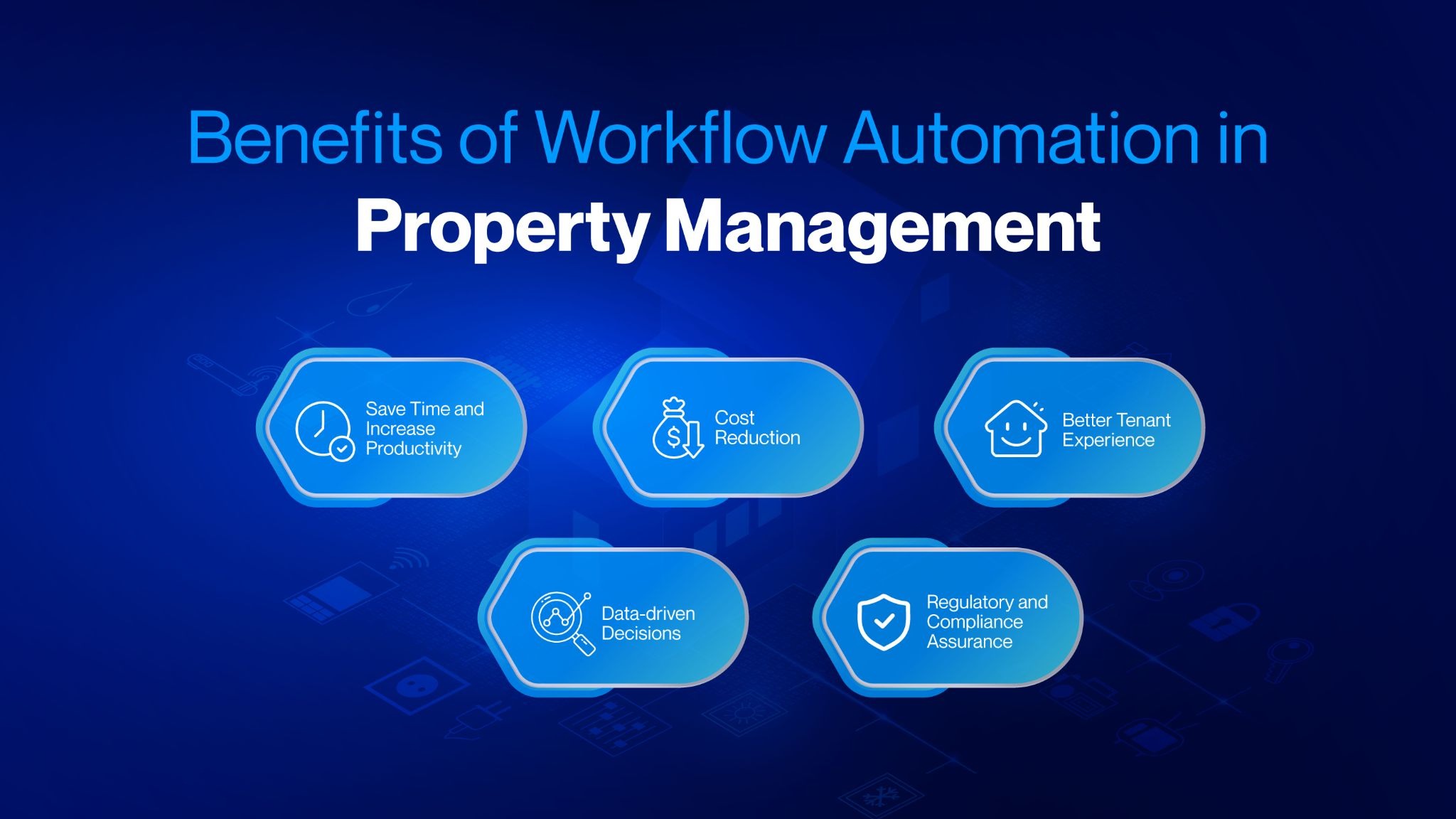
Here are some major advantages of automating the property management workflow:
Save Time and Increase Productivity
Administrative tasks, such as lease management, rent collection, and tenant collections, can consume significant time. A team responsible for property management can utilize AI tools and software to streamline this task. They can focus on other tasks, such as handling maintenance requests or providing other client services.
Cost Reduction
Performing manual tasks can increase the chance of error. Property management services can enhance their efficiency and minimize errors by leveraging technology. They can reduce many unnecessary expenses in that way. A study has shown that office phone calls in property management firms can be reduced by 65% through automation.
Better Tenant Experience
Automation can improve tenant satisfaction. Tasks such as maintenance updates, rent reminders, and renewals are triggered instantly. It can lead to improved communication and faster resolution of tenant problems. A survey report from the Indian Institute of Property Management indicates that property managers can reduce their response time by 25% by utilizing AI and automation.
Data-driven Decisions
Automated systems capture key performance data in real time. Managers can quickly view occupancy trends, payment patterns, or maintenance response times to make informed decisions. These insights help optimize budgets and long-term planning.
Regulatory and compliance assurance
Automation ensures no inspection, permit, or audit date slips through the cracks. Systems can give alerts when deadlines approach. It helps property managers to follow compliance and avoid legal issues with their assets.
Vision AI for the Real Estate Industry
Vision AI is a type of intelligent system that works with computer vision and AI. It can collect visual data, such as text, images, or videos, and then deliver useful insights from it. To learn more about Vision AI and computer vision, read this blog: Vision AI Agents vs. Traditional Computer Vision: What’s the Real Difference?
Some of the ways these two technologies can be used for automation in the real estate industry:
Property Valuation from Image
Vision AI models, such as vision transformers and deep convolutional neural networks, can estimate property value from images and metadata. These systems can analyze a property’s room conditions, lighting, and neighborhood visuals. Then, predict its fair market value.
Condition Assessment and Inspection
Some intelligent inspection tools powered by Vision AI can detect damage, cracks, or dents from uploaded images. These tools can be used to detect damage to a house’s roof and exterior surfaces. Tiliter’s Damage Detector is one such tool that can detect damage from images.
Object Recognition and Classification
Vision AI can identify and categorize objects within images of a property. This enables automatic inventory checks, insurance documentation, or verification of property conditions. For example, Tiliter’s Visual Reference Agent Agent can confirm if safety equipment, such as fire extinguishers and smoke detectors, is present and correctly positioned.
Property Maintenance and Monitoring
Vision AI can reduce the need for real estate agents or property managers to physically visit a site. It can evaluate the cleanliness of a room, surface, or area from images. It can provide insights into the level of cleanliness and organization of a property. For example, Tiliter’s Cleanliness Evaluator agent can inspect a property or equipment and deliver a cleanliness score.
Future of Property Management Workflow Automation
Regular workflow in property management will continue to shift from human control to a self-operating system. In the future, managers will increasingly rely on real-time data, an interconnected platform, and visual insights.
Here is what we can expect in the coming years:
Edge and IoT integration
Devices such as cameras, drones, and IoT sensors will be used to collect visual data for AI-driven platforms. For example, drones can perform exterior inspections, while sensors detect leaks, temperature changes, or occupancy patterns. These devices will start maintenance workflows or update dashboards. This gives AI greater autonomy in property management.
Spatial Computing and 3D Vision
The rise of spatial computing and 3D vision technologies will revolutionize how professionals interact with properties. Using AI-generated 3D models, managers can remotely and accurately inspect buildings. They will be able to create a renovation plan and simulate maintenance activities before executing them. This approach reduces costs and minimizes downtime. It also increases collaboration between property owners, contractors, and engineers.
Cross-Platform Orchestration
Automation will no longer operate in silos. Future systems will connect seamlessly with tenant portals, ERP platforms, financial software, and CRM tools. A Vision AI agent will be in place to ensure that image data, workflow automation, and business intelligence all function as a unified, synchronized system.
Market-level Automation
AI will manage the entire portfolio of an owner, rather than individual properties. They will evaluate asset performance, forecast maintenance cycles, and optimize capital expenditures across multiple locations. This level of automation transforms property management from an operational task into a strategic and data-driven function that maximizes long-term value.
Final Verdict
Workflow automation can simplify operations in property management. Vision AI can play a significant role in automating property management workflows. It can reduce costs and improve service quality in the real estate industry.
Industry professionals in property management can work more efficiently and reduce errors in their activities with the aid of the latest technologies, such as AI. Tiliter’s Vision AI Agents can also help the property manager automate their tasks. Ready to upgrade your property management workflow? Explore our Vision Agents and start building the future of real estate automation today.