
Collect Less. Verify More.
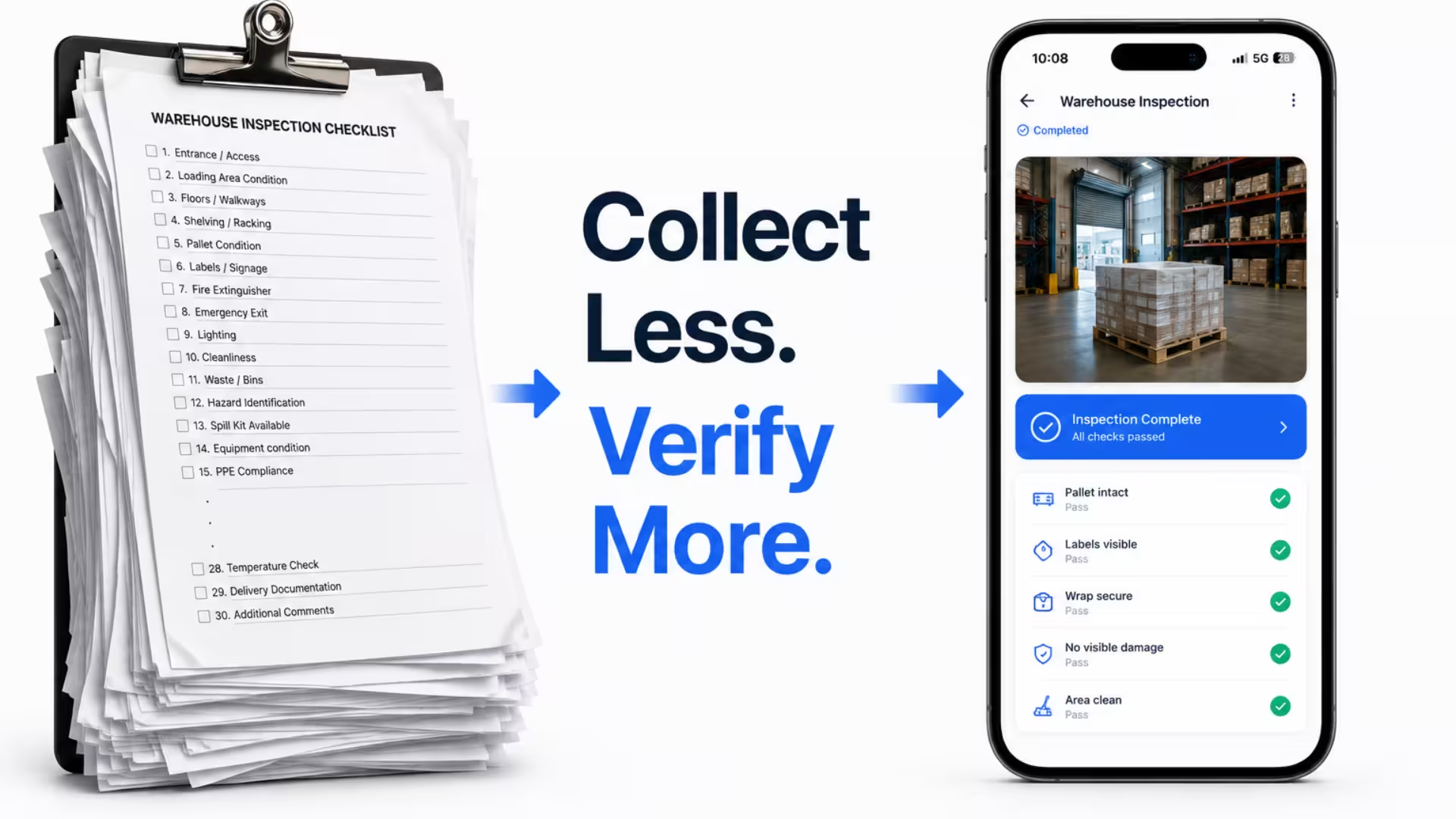
Every business relies on operational workflows. Whether you’re preparing a hotel room for the next guest, accepting a delivery, checking PPE on a construction site or inspecting equipment before maintenance, the goal is always the same: make a confident business decision based on what happened in the real world.
On paper, the process seems simple. Create a checklist, ask employees to complete it, collect the evidence and generate a report.
In reality, it rarely stays that simple. As workflows evolve, they tend to become longer and more complicated. New questions are added. Extra photos become mandatory. Comment fields appear “just in case”. What started as a five-minute inspection slowly turns into twenty minutes of administration.
The result is predictable. People rush through inspections, skip steps, enter meaningless comments or complete reports after they’ve already left the site. Managers begin questioning whether the information reflects reality, while employees see the workflow as paperwork rather than something that helps them do their job.
The problem isn’t the people.
It’s the workflow.
Start with the decision, not the checklist
One of the biggest mistakes organisations make is designing workflows around the information they want to collect instead of the decision they need to make.
A much better starting point is a simple question:
What are we trying to decide?
Is this room ready for the next guest?
Was this shipment damaged before we accepted it?
Is the technician wearing the required PPE?
Has this equipment been serviced correctly?
Every workflow exists to answer a business question. Everything else, from the checklist to the photos and comments, is simply evidence that supports that decision. When you think about workflows this way, something interesting happens. Instead of adding more questions, you begin removing the ones that don’t actually help.
More evidence doesn’t always create more confidence
One of the most common assumptions is that proving something happened requires collecting as much evidence as possible.
Take a cleaning inspection as an example. Many organisations ask for separate photos of the floor, sink, benches, rubbish bin, microwave, cupboards and refrigerator. The intention is understandable. More photos should mean more confidence.
In practice, it usually means more time, more friction and more opportunities for inconsistency.
A better workflow asks a different question.
What’s the minimum amount of evidence needed to make a confident decision?
A single well-positioned image may allow multiple things to be verified at once. If everything meets the required standard, the inspection is complete. If something can’t be verified, or AI identifies a potential issue, the workflow can request another image or additional information.
The same principle applies almost everywhere. A delivery may only require one overview image if everything arrives intact. A worker checking onto a construction site may only need one photograph if all required PPE is visible. A property inspection may only require close-up images if damage is detected. The objective isn’t to collect more photos.
It’s to collect enough evidence to make a trusted decision.
Design for the common case
Many operational workflows are built around the worst-case scenario.
Every inspection assumes something has gone wrong, so every employee is asked to complete every possible step every single time.
But that’s not how operations work. Most deliveries arrive without damage. Most rooms are cleaned correctly. Most employees follow procedures. Most inspections pass. Good workflows recognise this. They make routine work quick and straightforward while automatically expanding when something unexpected happens.
Instead of asking every employee to complete a detailed damage assessment, the workflow requests additional photos only if damage is detected. Instead of requiring lengthy comments on every inspection, it asks for an explanation only when something fails.
The extra work belongs to the exception, not the rule.
The biggest bottleneck isn’t collecting evidence
One thing we’ve consistently observed over the past decade is that most organisations already collect plenty of operational evidence.
Photos are taken. Inspection forms are completed. Reports are submitted. The problem is rarely collecting the information. The real bottleneck is reviewing it.
Someone still has to open every photo, compare it against a standard, decide whether it passes, notify the right people and determine what happens next. As organisations grow, that manual review quickly becomes impossible to scale.
This is where operational workflows are beginning to change.
Instead of simply capturing evidence, they can now verify it as it’s submitted, identify exceptions immediately and trigger the next action while the worker is still on site. That means problems can be resolved immediately instead of being discovered days later when someone eventually reviews a report.
Great workflows reduce effort, not increase it
There’s a common misconception that better operational processes require employees to do more work.
In reality, the opposite is true.
The best workflows reduce unnecessary effort. They guide people through the task, collect only the evidence that’s needed and automate as much of the verification process as possible. Rather than relying on experience or subjective judgement, they create consistency by making the right action the easiest one to take.
When a workflow is simple to complete, people complete it properly. When the evidence is objective, managers trust the outcome. When verification happens immediately, the business can act while it still matters.
That’s when operational workflows stop feeling like administration and start becoming part of the operation itself.
Why we built Tiliter this way
This shift in thinking has shaped how we’ve built the next generation of the Tiliter platform.
Rather than creating another AI tool that simply analyses images, we wanted to build a platform that helps organisations design complete operational workflows from start to finish. A manager can create a workflow in minutes, assign it to a team and have inspections completed through the web or mobile app. AI quietly verifies the evidence in the background, but verification is only part of the story.
Once a decision has been made, the workflow shouldn’t stop. In most businesses, that’s where the real work begins. A successful inspection might automatically notify a customer that a property is ready, trigger the next stage of a project, or update another system without anyone needing to send an email or make a phone call. If something fails, the workflow can immediately notify the right person, request additional evidence or escalate the issue before it becomes a bigger problem.
The technology isn’t the workflow. It simply makes the workflow smarter by ensuring that trusted decisions automatically reach the people and systems that need them.
Whether it’s a cleanliness inspection, a delivery check, a PPE audit or equipment verification, the principle remains the same: collect only the evidence you need, verify it automatically and move the result to the right people at the right time.
We believe that’s where operational workflows are heading. Not towards longer checklists or more paperwork, but towards connected processes that keep work moving. Because when trusted decisions flow automatically through an organisation, people spend less time chasing information and more time acting on it.
Looking ahead
For years, businesses have invested in software that documents work. The next generation of operational software won’t just record what happened; it will help verify it, make decisions from it and automatically move those decisions to the people and systems that need them.
That’s the opportunity we see.
To give every team better tools to capture evidence, make consistent decisions and keep work moving. When trusted information flows automatically through an organisation, managers spend less time reviewing reports, employees spend less time completing paperwork, and everyone can focus on taking action instead of chasing information.
Because the future of operations isn’t about collecting more data.
It’s about turning evidence into decisions.